


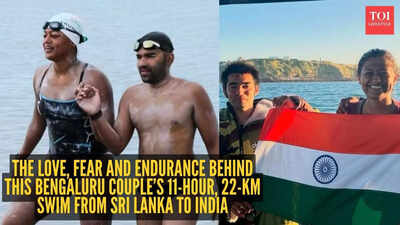
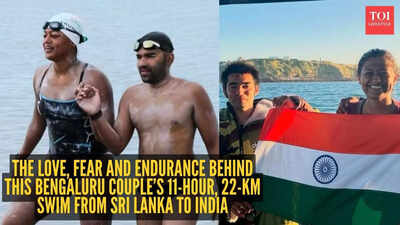
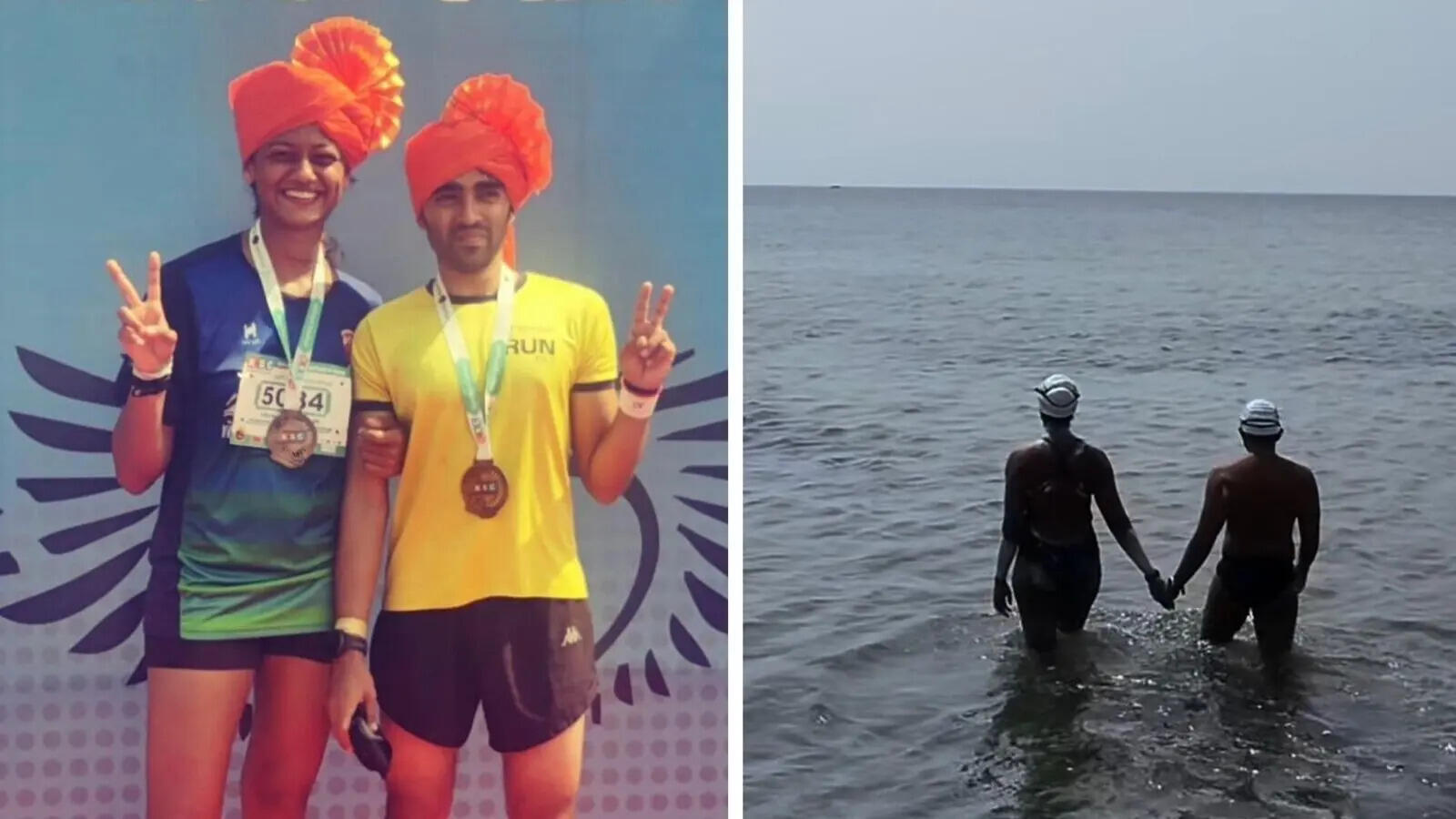
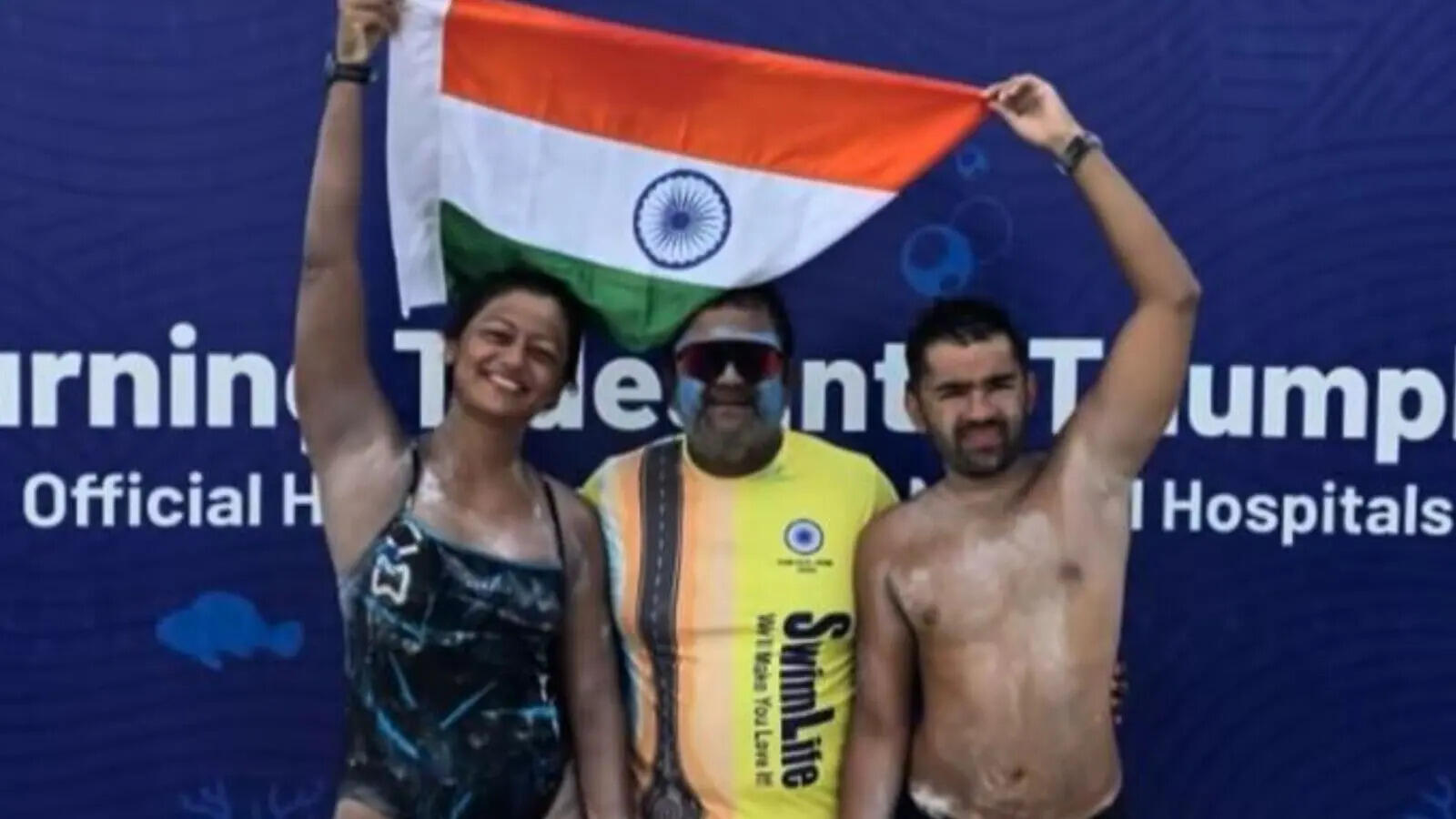
At 4:30 a.m., somewhere between Sri Lanka and India, the sea was pitch-black.The only thing visible ahead was a blinking light in the distance.Around them was nothing except dark water and silence.Every few strokes, something brushed past their bodies in the water. At one point, flying fish began colliding with them in the dark. They could not properly see what was around them, and for the first few minutes, fear moved quietly beside them.But by then, they had already spent months preparing themselves for this exact moment.For nearly 11 hours, Bengaluru-based couple Danish and Vrushali kept swimming through the open sea, side by side, taking breath after breath, stroke after stroke, until they finally completed a 22-km swim from Sri Lanka to India.On paper, it sounds like an elite feat of endurance.But the real story has very little to do with sport.

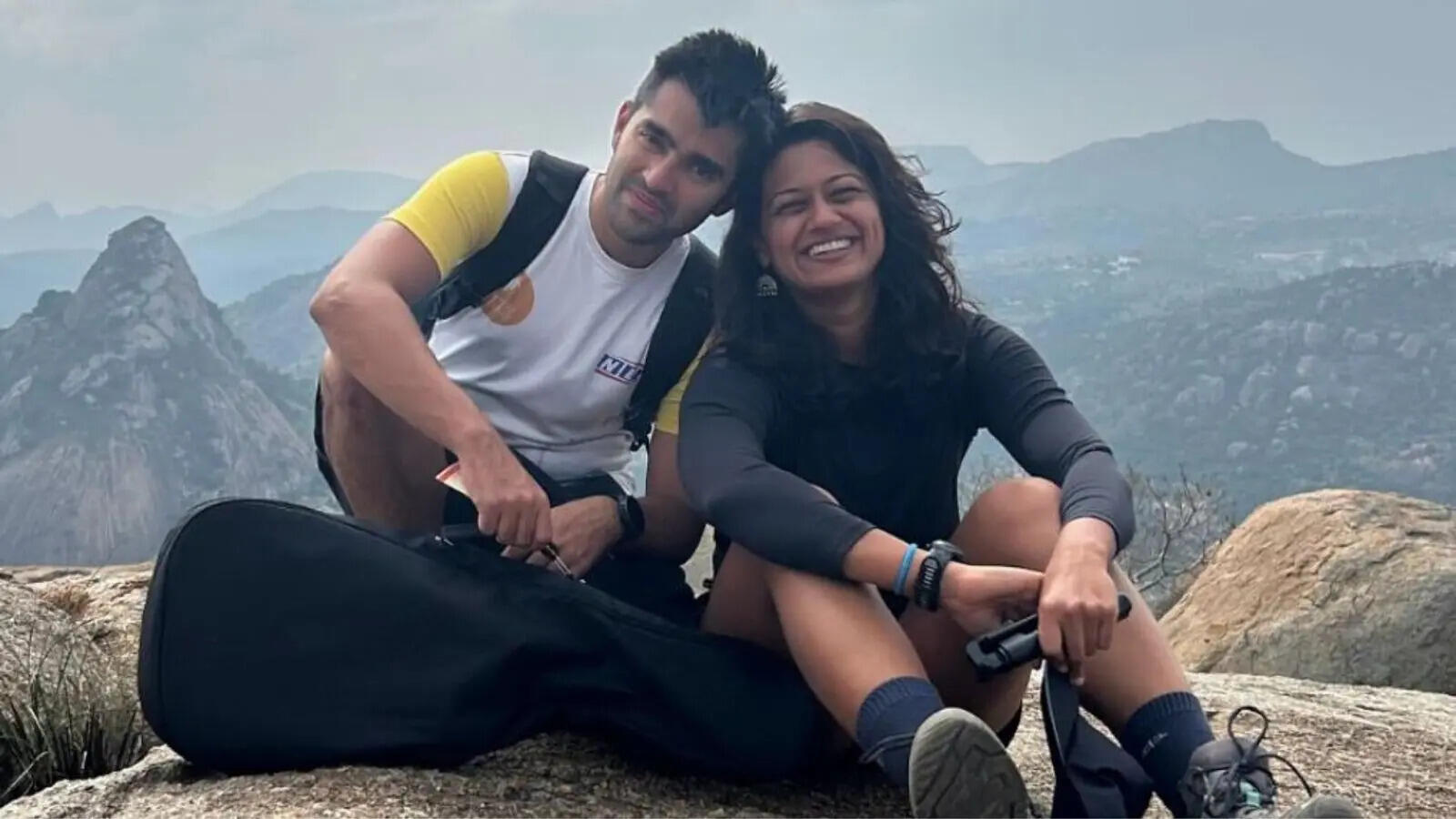
It began years earlier at a waterfall near Bengaluru, where Vrushali panicked in the water and genuinely thought she might drown.Back then, neither she nor Danish even knew how to swim properly.And when they finally decided to learn years later, the goal was never adventure or recognition.It was simply never to feel that helpless again.
“I thought I was going to drown”
Long before they became open-water swimmers, the couple were simply two people on a picnic near Bengaluru.Back in 2018, the couple had gone to a waterfall near Bengaluru. From the shore, the waterfall looked deceptively close – barely 20 or 25 meters away – and they assumed they could somehow make it across. “We were basically doing random head-up swimming, just trying to move our hands and legs and reach there somehow,” Vrushali told The Times of India.The distance looked small from land.Inside the water, it felt completely different.By the time they began swimming back, exhaustion had started setting in. She spotted a rock midway and tried to hold onto it to rest for a moment.But the rock was slippery.“The moment I put my hand on it, I slipped. I panicked and started thrashing in the water. And that made me drown.”
Danish had already almost reached the shore when he looked back and noticed half her hand coming out of the water.He immediately swam back and pulled her out.Nothing serious happened that day.But something changed permanently.“That incident made me feel like I never wanted to feel so helpless again.”At the time, she did not dream about crossing oceans.She just wanted to learn enough swimming so that one day she could return to that same waterfall and comfortably swim those 25 meters without fear.Then life got busy. Work took over, and the idea stayed somewhere in the background for years.But the thought stayed.Then another moment pushed them even further.
The Maldives moment that stayed with them
After getting married, the couple travelled to the Maldives for their honeymoon.Like most tourists, they tried different water sports – paddleboarding, jet skiing, snorkelling.And like most non-swimmers, they held tightly onto their life jackets.The turning point came when they noticed two young European teenagers nearby.“They were maybe 12 or 13 years old. They were jumping off a pier, snorkelling, free diving, swimming around coral reefs so comfortably.”The couple could not stop watching them.“It felt very inspiring. We kept thinking how empowering it must feel to be that comfortable in water.”That feeling stayed with them after the trip.Finally, in 2022, they decided to learn swimming seriously.They started small.One hour before the office every day.Swimming classes in the morning.Regular jobs during the day.At that point, crossing international waters was the last thing on their minds.
From office life to 5:30 am training sessions
Today, their lives revolve around water.Their routine is intense, repetitive, and disciplined in ways most people would struggle to maintain.They wake up around 5:30 every morning.Weekdays usually involve two to three hours of swimming. Weekends can stretch to five or six hours in the water. Strength training follows after that.
Then comes work.A regular 9-to-5 schedule.Dinner early.Sleep by around 8 pm.And then the same thing again the next morning.“Honestly, our life is pretty monotonous,” Vrushali told The Times of India, laughing.But there is joy hidden inside that monotony.From the outside, it might even look repetitive.But inside that routine, tiny improvements become milestones.A slightly faster lap.A little more endurance.Two seconds shaved off a swim timing that took weeks to improve.“We both understand how much those two little seconds matter. Having somebody appreciate those tiny wins makes all the difference.”Over time, the pool stopped being just a place to exercise.It became a shared language between them.
The hardest part was learning to sit alone with their thoughts
Most endurance sports at least offer distraction.A runner can look around.Cyclists can talk.Trekkers can stop and admire the view.Swimming is different.Especially open-water swimming, where the landscape seldom changes, and there is nowhere for the mind to escape.“You cannot really talk to anybody,” she said.“There’s no visual feedback. Nothing around you. You just keep swimming.”For hours.Sometimes, with nothing visible except water in every direction. That mental isolation, Vrushali said, is often harder than the physical exhaustion.The real challenge, she said, is learning how to exist with your own thoughts for hours.“In today’s world, we are constantly getting dopamine from our phones every second. But during a 10-hour swim, you are just with yourself.”Eventually, the challenge becomes less physical and more mental. Time slows down, thoughts grow louder, and there is nowhere to escape your own mind.And that is why preparation mattered so much more than people realize.“The more you sweat during training, the less you bleed on the day of the swim.”In the middle of the ocean, the world suddenly went quietSomewhere in the middle of the swim, something shifted emotionally.After several hours, the exhaustion settled into a rhythm, and the world around them suddenly felt still.“It was just Danish and me in the water, and our support crew sitting right next to us,” she said.“There was nothing else for miles and miles.”The water around them had turned bright turquoise blue.Clear, pristine, and endless.“Just being in that moment, in the middle of the sea, with nothing around you… It felt very humbling but also empowering at the same time.”Oddly, the most emotional moment for her was not reaching India.It was that strange stretch in the middle of the ocean – suspended between two countries, cut off from land, yet feeling more present than ever before.“Those quiet moments in the middle of the ocean,” Vrushali said, became the memories she would carry forever – not the finish line, not the distance, but the strange stillness of being surrounded by nothing except blue water and silence.
“Every time I breathed, I saw him next to me”
Even though the swim was physically individual, emotionally it became something they carried together.Every few strokes, while taking a breath, she would turn her head slightly and see Danish swimming beside her.“That alone was enough motivation.”For nearly 11 hours, they kept silently checking on each other.There were no conversations or dramatic motivational speeches in the middle of the sea – just the quiet reassurance of seeing the other person still swimming beside you.“We’ve trained together every single day. We know when the other person is low. We know when they’re doing well. We know how to respond without even speaking.”During rough patches in the swim, that emotional familiarity mattered.When one person slowed down slightly, the other adjusted.When exhaustion appeared, reassurance came quietly through small gestures.Just knowing they were both enduring the same thing together made the distance feel possible.
The first 20 minutes were terrifying
Despite all the preparation, there were moments of fear.The swim began before sunrise.It was pitch dark, the water was cold, and visibility was minimal.For the first several minutes, flying fish kept leaping out of the water and colliding with them.“We could feel things hitting us every few strokes.”At that moment, not being able to see clearly made the imagination worse.“To be honest, I didn’t even want to know what exactly was touching us.”But the fear passed.Soon, the rhythm of swimming took over.And after that, neither of them seriously considered quitting.“There was never a moment when we thought we shouldn’t continue.”Partly because they were lucky enough to avoid serious injury or debilitating pain.But mostly because mentally, they had already committed themselves long before entering the water.
“People think the sea is the scariest part. It isn’t”
For many people, the idea of swimming for hours in open waters sounds terrifying.Sharks.Marine life.Deep water.Isolation.But according to the couple, the reality is much more structured and controlled than people imagine.“Open-water swimming is actually one of the safest sports if done properly,” she explained.Throughout the swim, trained crew members monitored them constantly from nearby support boats.“If anything looks wrong, they can immediately pull you out.”They had hydration support, timed feeding breaks, recovery food, and even freshly cooked meals prepared before the expedition.“The support was phenomenal,” Vrushali said.
The coach who jumped into the ocean when they needed him most
When they speak about the crossing, one name comes up repeatedly.Their coach is Satish Mohan Kumar.For nearly 18 months, he trained them relentlessly.Daily swim plans.Weekly schedules.Technique corrections.Practice swims.Mental conditioning.“He prepared us stroke by stroke.”And even during the actual crossing, he stayed beside them on the support boat, monitoring them continuously.At one point, when he sensed they were mentally draining out, he jumped into the ocean and swam beside them himself for more than an hour.“This expedition would have been impossible without him,” Vrushali said.After nearly 11 hours in salt water, she craved only one thing: ice creamStrangely, after reaching India, the emotions did not arrive immediately.There was no dramatic finish-line moment waiting for them.No emotional speech.No instant rush of victory.Instead, there was exhaustion.And one surprisingly specific craving.“I honestly just wanted ice cream,” Vrushali said, laughing.After spending nearly 11 hours in salt water, her lips and tongue felt raw.At that point, ice cream felt more rewarding than the finish itself.It took nearly an entire day for the achievement to fully sink in.Only later did they begin processing what they had actually done.But even then, the memories that stayed strongest were not from the finish line.They were from the middle of the crossing itself.The endless blue water, the silence, and the rhythm of breathing.And the comfort of knowing that every time she turned her head for air, Danish was still there beside her.
Why they hope more Indians start learning how to swim
Beyond the expedition itself, the couple says they are trying to use social media to create more awareness about swimming in India.According to them, many extraordinary Indian swimmers remain largely unknown outside niche sporting circles.“We have phenomenal swimmers in India, but very few people know their stories.”For them, swimming in India is still treated more like a hobby than an essential survival skill.“Less than 1% of Indians know how to swim,” she said.For them, this conversation goes beyond sports.It is also about safety.Confidence.And freedom.They say one of the most rewarding parts of sharing their journey online has been receiving messages from people who finally joined swimming classes after watching their videos.Women.Older adults.Beginners who had once been afraid of water.“People tell us they did their first open-water swim because of our journey. That feels very special.”Perhaps that is why their story resonates far beyond sport.Because beneath the distance, timing, and headlines, this is really a story about confronting a fear that quietly stayed with someone for years.Years ago, Vrushali struggled in barely 25 meters of water near a waterfall outside Bengaluru.Years later, she spent nearly 11 hours swimming through the open sea between Sri Lanka and India.Somewhere between those two moments, the water stopped becoming something she feared.And became something that set her free. Images: @our.life.in.miles/@vrushaliprasade