


Programming is often seen as a highly specialised skill, but in the age of artificial intelligence (AI) agents, the barriers to coding have come down. This means that almost anyone can take up coding and build software. In recent months, developers with limited technical expertise have been embracing “vibe coding” to write code with less human intervention.
Microsoft-owned GitHub, a widely used code repository platform, is at the centre of this shift in how software is developed.
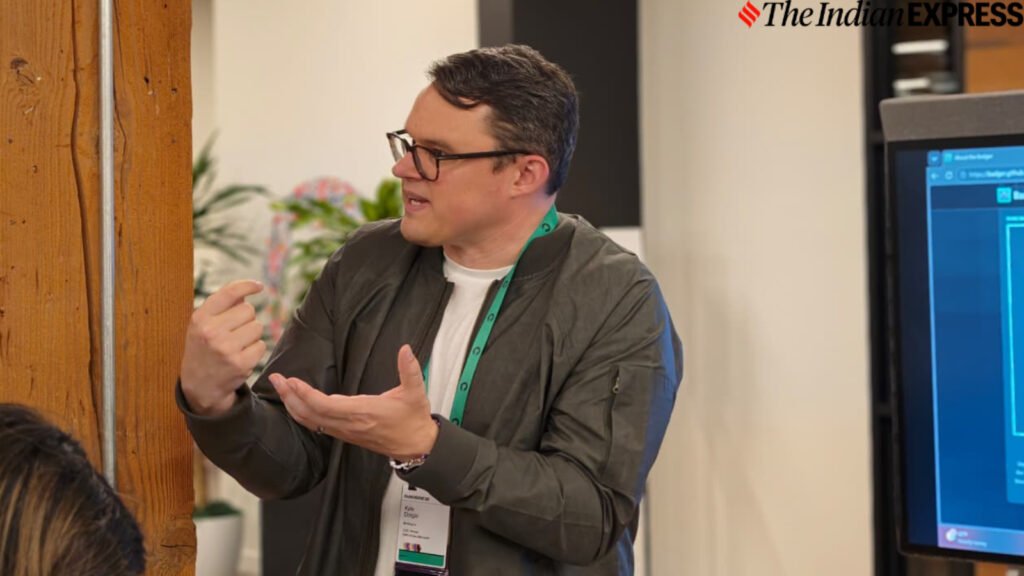
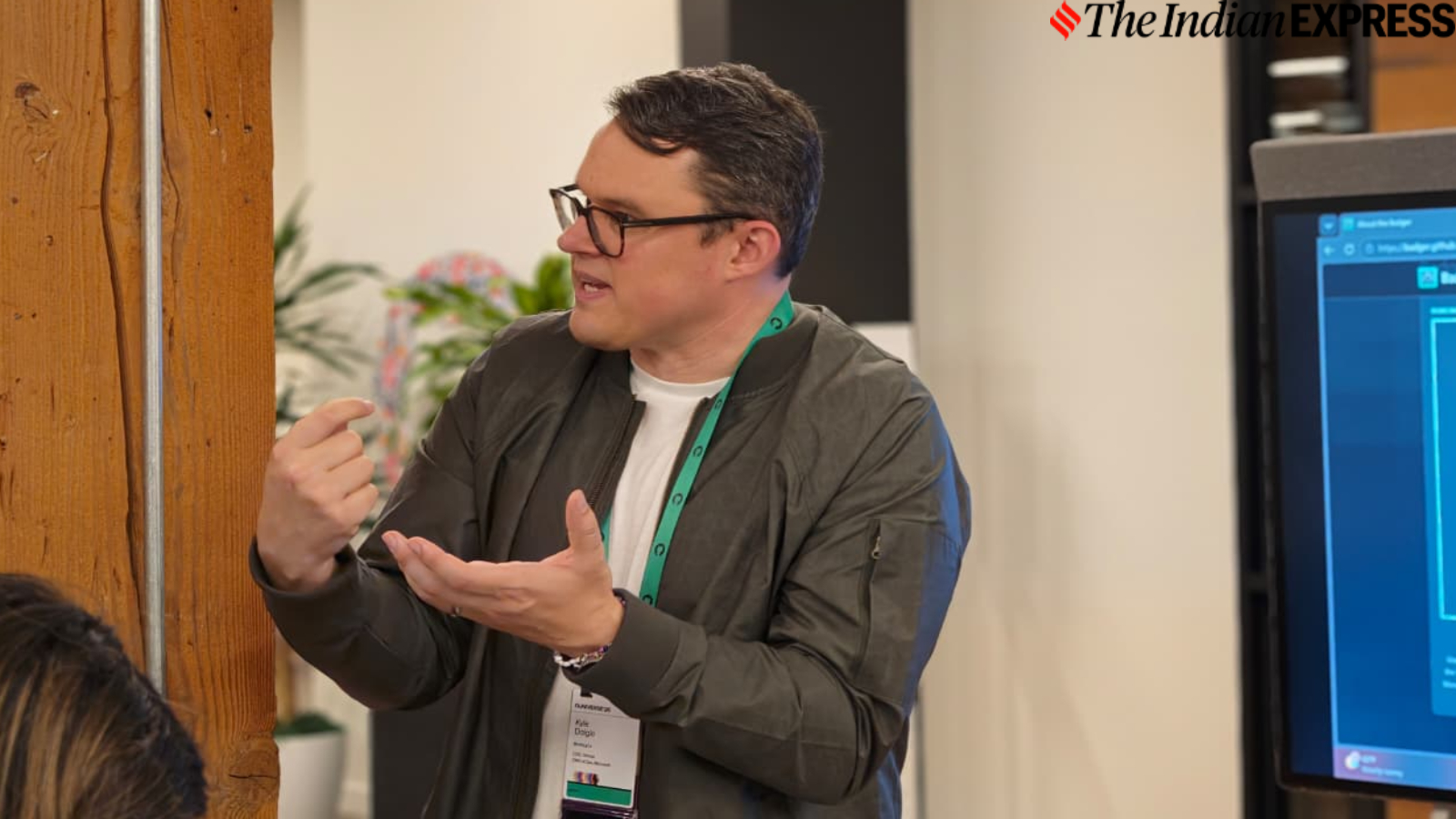
Chief Operating Officer and Chief Marketing Officer Kyle Daigle spoke to The Indian Express about how AI agents are changing coding, the future of programming, and the skills needed to become a developer.
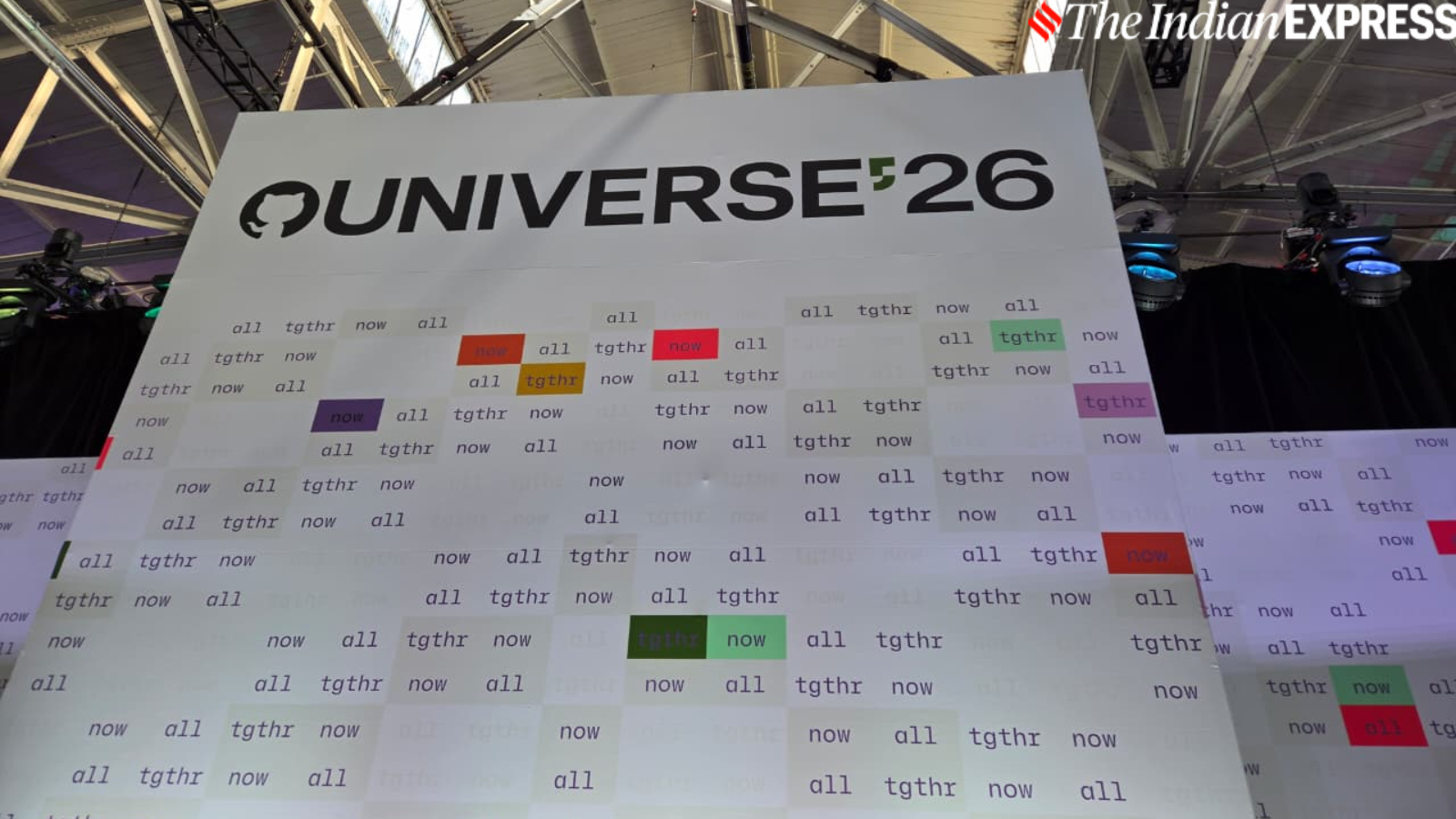
Here are the excerpts from the interview on the sidelines of GitHub Universe 2026 in San Francisco. They have been lightly edited for content and clarity.
Q. AI agents can write and test code, document it, make architectural decisions, and move work through multiple stages of development with limited human intervention. In a way, Agents change the equation of how software is traditionally being built. How do you think GitHub is shifting developers’ roles?
Daigle: We are seeing more developers building and pushing projects than ever before. We now have 225 million users, with 50 million using GitHub Copilot every day. In 2026, developers pushed more code, with 13.5 billion contributions, than they did in 2024 and 2025 combined.
GitHub has always been home to developers, no matter what they are building or which tools they use. Whether they are building something new, updating an existing application, or expanding its functionality, it all happens on GitHub. In fact, the focus is not just on enterprise developers but also on open-source maintainers, who are building more open-source projects and making more contributions than ever before, thanks to these tools.
Story continues below this ad
The scale at which we have been operating and growing this year has been enormous. Everyone has access to agents, and I think many people who are taking their first steps into coding are doing so on GitHub.

Q. In the era of AI agents, many Silicon Valley programmers are barely writing code themselves. We hear a lot about AI-assisted coding, and companies are increasingly adopting these tools. Do you think AI-assisted coding has liberated developers and made their work better, or has it made things more challenging?
Daigle: This is very similar to the other transformations we have seen in the industry. Developers have always been in the business of solving problems. For a while, that meant working with punch cards. Then came static languages, compilers, and so on, followed by dynamic languages and, now, coding agents that can choose the languages they use.
Although these advances let developers and businesses do more interesting work and solve more interesting problems, they don’t eliminate the need for a developer to deeply understand what they’re trying to achieve, how to implement it, and how to put the pieces together. We still need to ensure that the final software works at the scale I need and delivers what I intend it to.
Story continues below this ad
I think these tools have made us, as developers, capable of accomplishing far more than we could if we were still writing every line of code by hand, limited to compiled languages, or working with punch cards. We would never have reached where we are as an industry if we hadn’t been able to move up those layers of abstraction.
Q. AI may have increased the speed at which code is produced, but that does not necessarily mean software can be delivered at the same pace. Do you agree with this statement?
Daigle: In some ways, building software has never been the hardest part. The real challenges have been deciding what to build and knowing whether you have built it correctly.
Our focus is on helping developers navigate the entire journey, from planning and defining their intent to verifying the final product. Coding agents work incredibly well when they can verify their own work. For example, we can all go into a tool like GitHub Copilot and ask it to build an app that ranks the emojis we use.
Story continues below this ad
But imagine if the coding agent could build that app, inspect it, click through it, deploy it, verify that it is running correctly, scan it for vulnerabilities, and remediate any security issues. That verification and quality-assurance step is incredibly important. If we focus only on code generation, we could end up generating a lot of code without actually becoming more productive.
That’s why verification and quality steps are important. Our code quality tools can also automatically remediate issues with GitHub Copilot, and if those capabilities don’t fully meet your needs, Copilot Automations lets developers and companies build custom workflows. This means that whenever a pull request is opened, an issue is closed, or an event occurs anywhere on the platform, you can build a custom verification loop around it. That is what will help you deliver software faster, rather than simply generate more code more quickly.

Q. How has GitHub AI Agent performed since its launch last year, and what have you learned so far?
Daigle: GitHub Copilot continues to grow. We now have 50 million users using GitHub Copilot and 140,000 organisations worldwide that have adopted it. The usage of Copilot’s cloud agent has also grown by 230 per cent.
Story continues below this ad
I think that, over the past year, we have moved from the idea that developers would work with Copilot one-to-one: asking a coding agent to complete a task and then waiting for the results. Now, whether someone is using the GitHub Copilot app, VS Code, the Copilot CLI, or GitHub.com, we run multiple coding agents simultaneously, sometimes even within a single project.
Perhaps the biggest lesson we learnt over the past year is that we do not just want to make it easier for developers to generate more lines of code. In the past, we increased productivity by using and reusing libraries, among other things. Now, when we generate a line of code, we want to make sure it is necessary, that it works, and that I can verify that it works. That outer loop of the developer lifecycle is what we have been focusing on over the past year to ensure that we are helping developers build software.
Q. Do you think basic programming languages like Python will eventually become obsolete? Will developers need deeper technical expertise and specialisation to become software engineers in the age of AI?
Daigle: Agents are playing a bigger role in choosing which programming languages are used most frequently. I don’t think these underlying languages are going to die, but I do think agents will change which languages they turn to most often.
Story continues below this ad
We are still in a world where languages such as TypeScript, Python, and JavaScript are the most widely used. But there are instances where, for example, we rewrote the Copilot CLI from TypeScript to Rust because we could rely on GitHub Copilot to help us do that.
I think we will see more shifts in programming languages over the coming years. We may choose languages based on their technical capabilities, such as lower memory usage or easier deployment, rather than on whether developers have an in-depth understanding of each language, particularly at scale.
I think the key areas to focus on are understanding a language’s fundamentals, systems thinking, and problem-solving. These are especially important for people adopting AI coding agents, whether they are experienced developers, trying to write code for the first time, or looking to become developers.
The first step is not necessarily learning Ruby, Python, or JavaScript. It is understanding the problem they are trying to solve and breaking it down into smaller parts. That is what the first two years of a computer science degree are about, anyway: understanding the fundamentals, learning how to break down problems, and figuring out which tools to use to be productive.
Story continues below this ad
Q. Given how rapidly everything is changing, what do you think programming will look like over the next year?
Daigle: I think we will focus much more on how much capability and context we can give to a set of models to verify that what we are building actually works.
Previously, we relied heavily on unit tests and automated testing. I think these will continue to be important tools, but ensuring that what we build meets the user’s intent and allowing agents to carry out that testing for us will accelerate what we can build and how quickly we can build something that is ultimately correct.
I think GitHub Copilot has demonstrated to developers the potential of AI in their workflows. Now, we are also bringing more people into coding than ever before. I fully expect that, over the next year, it will become increasingly common for knowledge workers and information workers — people who may not consider themselves software developers — to build apps for their phones or web apps, perhaps just for their own use, or for their family and friends.
Story continues below this ad
The barrier between being able to program and not being able to program will begin to come down significantly. This will help democratise the ability to write code, at least for these kinds of personal computing use cases.
We have also seen model releases from all the major AI labs, including open-source and open-weight models, as well as sovereign models. I think this will make it increasingly clear that relying on a single model or working with just one model provider is not the best way to access frontier-level intelligence while maintaining control and choice for developers.
Q. In India, many students and professionals from non-technical backgrounds want to enter the tech industry and pursue careers in software development. Can they transition into tech roles even if they don’t know how to code? And do you think GitHub can help them make that transition?
Daigle: As a developer who joined GitHub 13 years ago, I can tell you that I don’t have a computer science degree. I wasn’t studying computer science in school. I was writing code the old-fashioned way because I was trying to solve problems in my town, including voter registration, using access databases.
I think one of the biggest barriers for many people is the feeling that they need to study computer science before they can become programmers. I used to buy 500-page books that taught you how to code in C from beginning to end, thinking that once I finished reading them, I would be a developer.
But the reality is that learning to code is often not the hardest part of becoming a developer. Especially now, you can get started easily. You can come to GitHub, sign up for a free account, start using Copilot, and the first thing it will ask you is, “What do you want to build?”
You can begin by thinking about the problem you want to solve and how you want your solution to work. I think this is particularly valuable for people from different backgrounds who have other passions and experiences, whether in the arts, languages, construction, digital technology, or design. They can draw on those experiences and skills to start building software, while asking questions along the way: Why was it built this way? Why was it deployed that way? Why isn’t it working on my computer?
This has never been a better time for curious people to learn a new skill like software development.
Whether we are talking about the startup industry in India or the global tech industry, everyone is looking for curious, passionate people who are willing to learn something new, because we are all learning together right now.
You don’t need a traditional educational background to start learning, experimenting, and eventually getting a role at a company or building your own business, small business, or startup, thanks to tools that can help you along the way.

Q. How important is India for GitHub?
Daigle: We are seeing more and more people become developers or write their first applications, and this trend holds true in India as well. India added 9.34 million developers to GitHub over the past year. India’s developer community continues to grow rapidly, with around 31 million developers on GitHub across startups and enterprises building sovereign AI and increasingly ambitious software.
We want to make this process easier with tools such as the GitHub Copilot app and the ability to work on a project with a swarm of agents that can help you with full context across everything you are building.
Disclaimer: The writer is attending Github Universe at the invite of Github US. Microsoft covered the travel and accommodation expenses.