


Foldables aren’t as niche as one might think. I often spot foldable phones in people’s hands, especially those in customer-facing roles. Maybe that’s a large enough addressable market for brands to justify offering foldable phones that are priced higher than your average high-end smartphone. But I often wonder why Motorola, which was the first mainstream brand to launch a flip-style foldable, never considered making a book-style foldable phone. Its peers, however, have been offering book-style foldables for years, including Samsung and Huawei. Even Apple is expected to launch a similar device in the future.
So, don’t be surprised if I tell you that I have spent the past month testing Motorola’s first entry into the segment, the Razr Fold. Surprisingly, it felt much more polished when I first saw the device earlier this year at the CES tech show in Las Vegas. Sure, it has its shortcomings being the first-generation device, but the overall experience, combined with its hardware, software, and cameras, makes it a solid foldable phone.

Here’s my review of the Motorola Razr Fold.
What: Motorola Razr Fold| Price: Rs 159,999
Distinct design and sleek profile
The Razr Fold draws inspiration from the brand’s popular Edge series. It features subtly curved edges and a square-shaped camera island that houses four cameras and gently slopes across the back. If you have used a recent Motorola phone, you will immediately notice that the same design language carries over to this foldable. I am also glad that Motorola avoided a glass back and instead opted for a woven, textured black finish, which gives the phone a distinctive look and feel. It’s also less fragile than a glass back. During my month with the device, I didn’t notice a single scratch or scuff on the rear panel. A case in the box protects the phone from everyday wear and tear, which is a welcome addition.
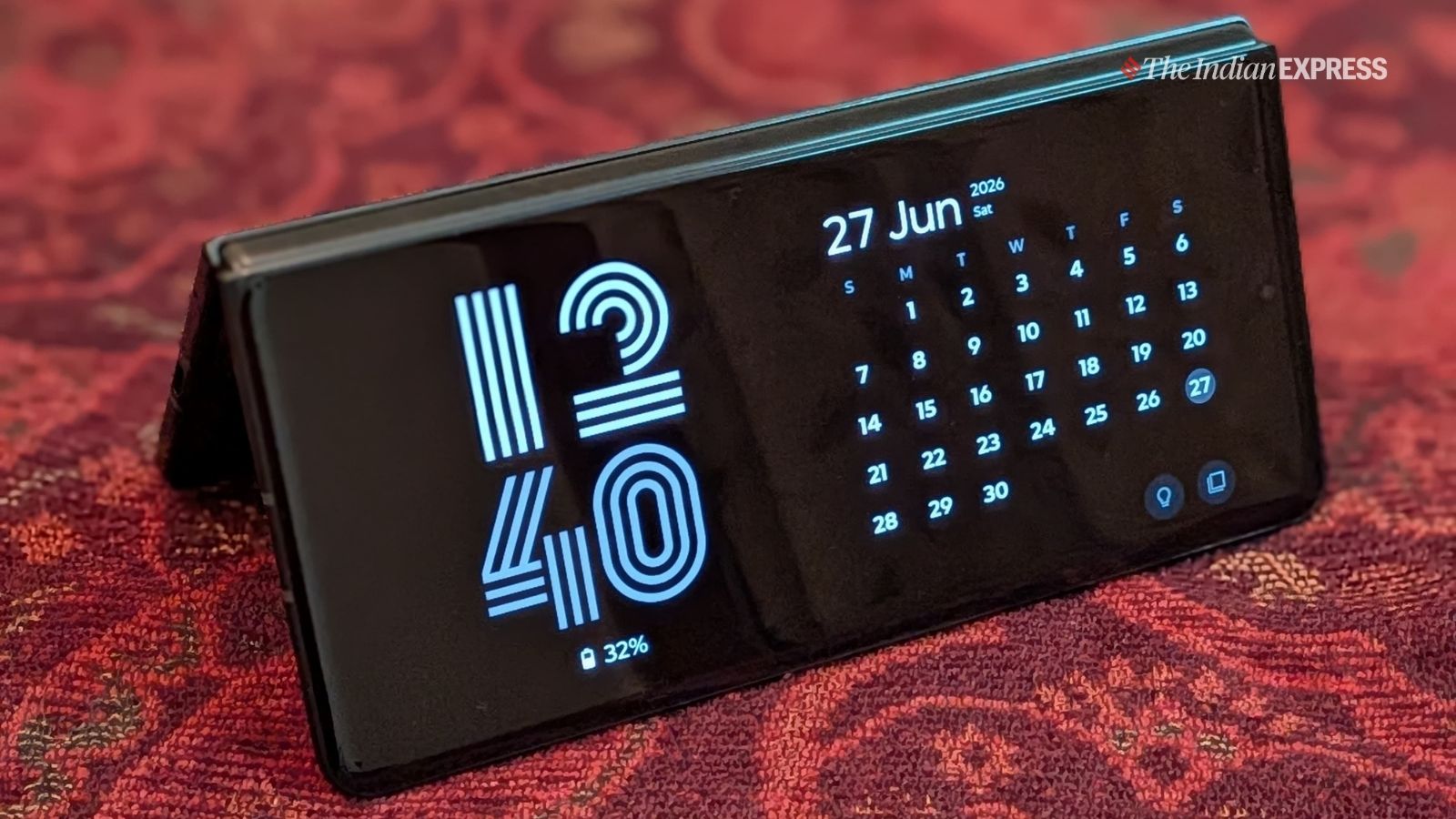

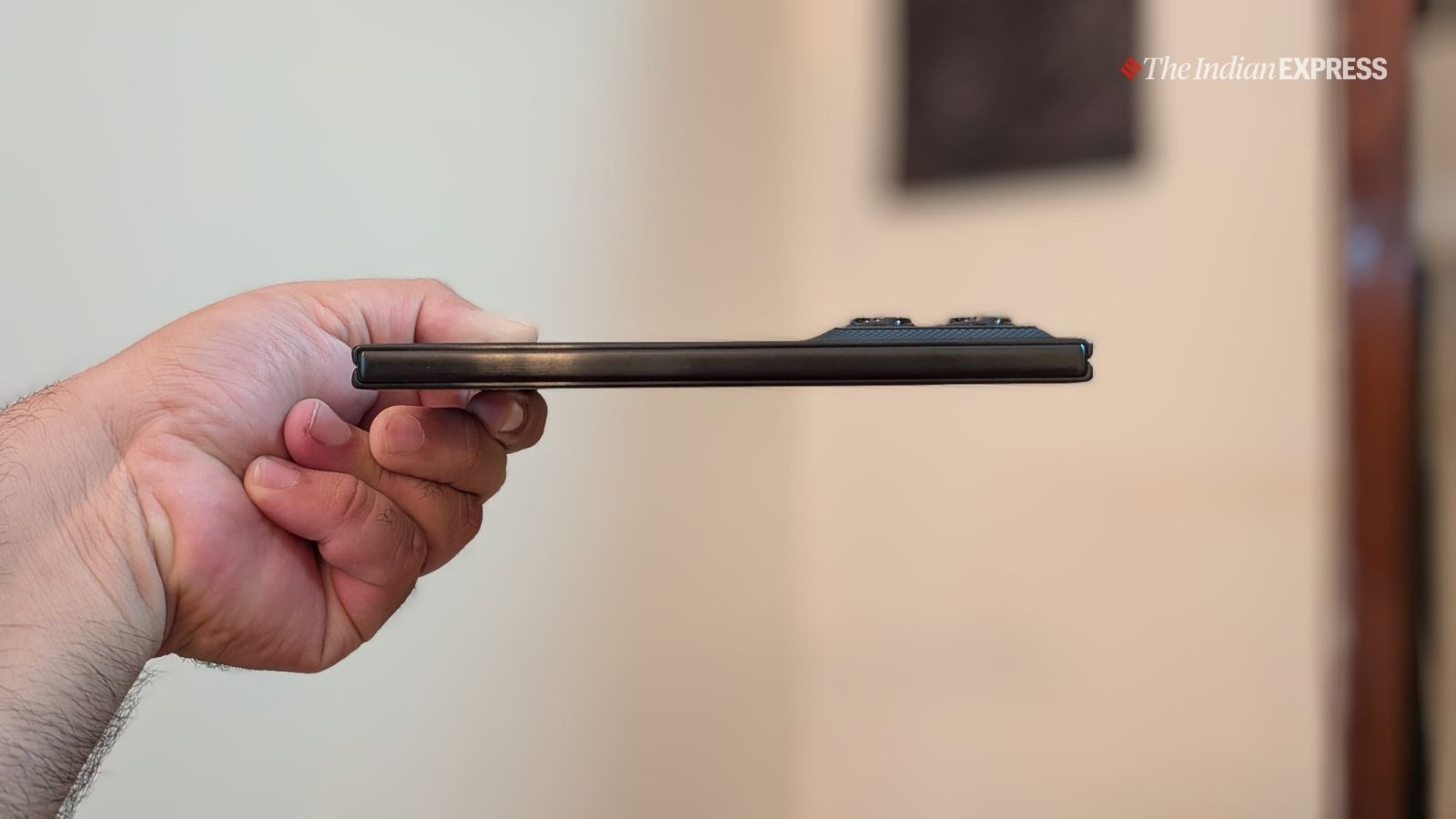
The Razr Fold measures 4.6mm thick when unfolded and 9.9mm when folded. It weighs 243 grams. While it maintains a relatively slim profile, it isn’t quite as thin or as light as the Samsung Galaxy Z Fold 7. I would say it sits somewhere between the Galaxy Z Fold 7 and the Google Pixel 10 Pro Fold in terms of size and weight.
A seasoned foldable phone user who has used both the Galaxy Z Fold 7 and the Pixel 10 Pro Fold for months, I can say the Razr Fold is designed to be an ultra-premium smartphone – and it shows. The curved edges, along with the Corning Gorilla Glass Ceramic 3 protection on the outer display, add an extra layer of durability. More importantly, I felt confident using the Razr Fold without a case.
The Razr Fold slides easily into my pocket, and I could sit comfortably even while wearing tight jeans. The phone also feels comfortable to hold for long periods, whether folded or unfolded. I think Motorola has nailed the basics of a foldable phone, and a lot of that comes down to its hinge. Its parent company, Lenovo, has decades of experience building laptops and perfecting hinge mechanisms, and it shows in the Razr Fold.
Another highlight, if you ask me, is the stylus support. It’s optional and sold separately, and although I didn’t use it with the device (I only briefly tried it at Motorola’s office in Gurugram during a briefing), I think a stylus makes sense. Since Samsung dropped S Pen support on the Galaxy Z Fold 7, Motorola seems to be capitalising on that opportunity.
Story continues below this ad
Keep in mind that while the Razr Fold has IP48 and IP49 ratings, offering water resistance for up to 30 minutes and protection against high-pressure water jets, it isn’t fully dustproof.
The screen(s) and multitasking powerhouse
Like any other book-style foldable on the market, the Razr Fold’s biggest selling point is its two-screen experience. The inner 8.1-inch display does have a visible crease, but it gradually fades into the background with regular use. Even when the crease is visible, it isn’t distracting. However, in my day-to-day use, I found myself relying more on the 6.6-inch outer display. It made the phone feel more like a traditional slab smartphone, which is familiar for most users – and I am no different.
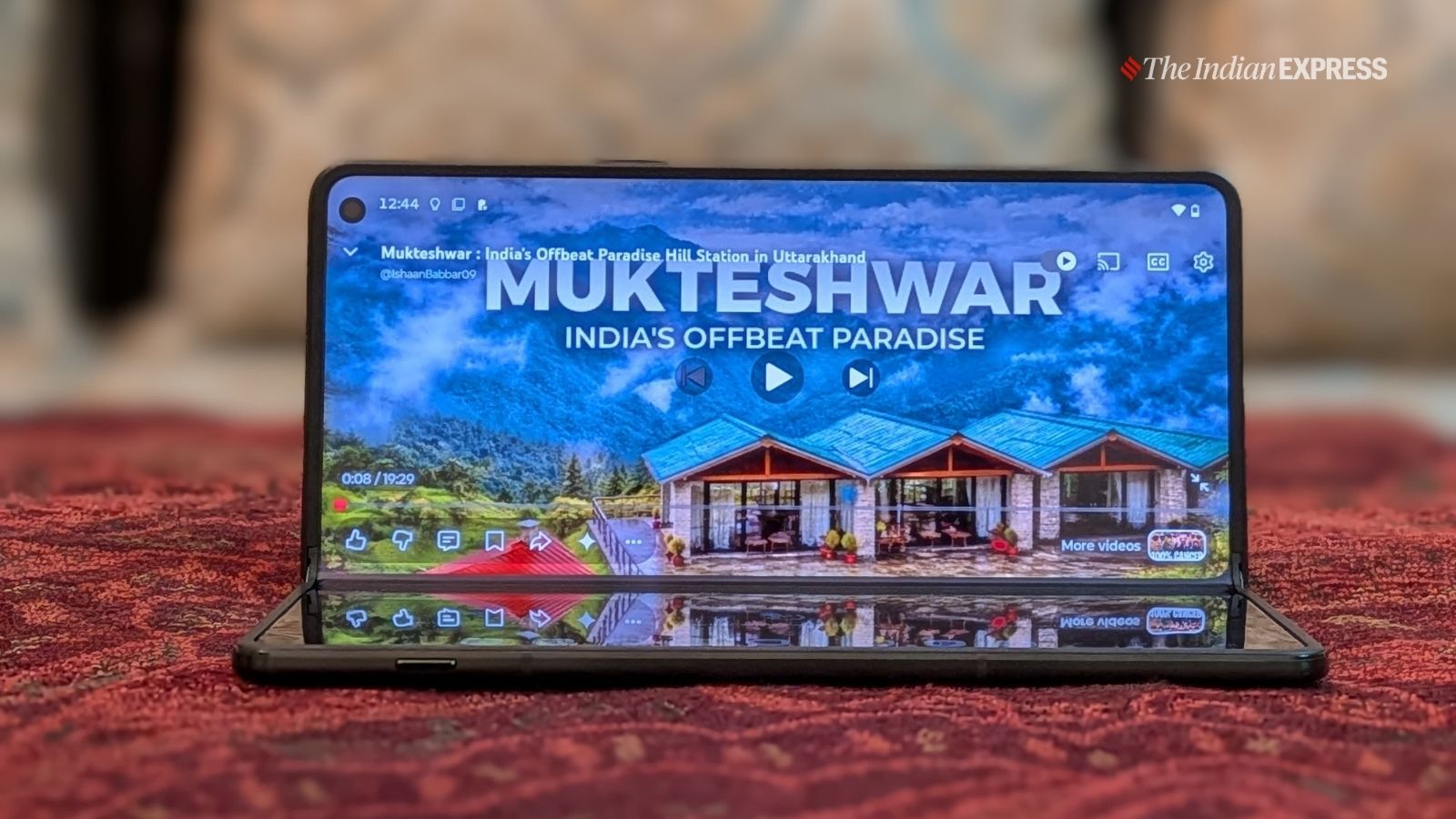
The fundamental idea behind a foldable phone is adapting to two screens. For me, having two screens makes everyday tasks easier. Everything, from reading The Indian Express e-paper to checking the site’s daily numbers on Chartbeat, feels more natural on the larger inner display. The extra screen real estate gives you a more complete view of the content, and the same applies to Zoom calls and taking notes.
Another great example is when you are reading an email or browsing a webpage with multiple links. With two screens, clicking a link means you can open it on the second screen and read it later without losing your place. As I have said before, having two screens at your disposal completely changes the way you multitask on a device.
Story continues below this ad
Of course, a lot depends on the user. In my case, I work for a news publication, which is a fast-paced profession, and I also travel a lot. For someone like me, a foldable phone makes a lot of sense. Not because I want to flaunt a phone with two screens, but because it is genuinely useful for the kind of work I do. I often type entire stories on the phone itself, and I also don’t mind using the Razr Fold’s screen as a monitor and pairing it with a Bluetooth keyboard and mouse. It may look odd to the average user, but it works for me.
Both displays are beautiful and clear. The 8.1-inch screen is great for Netflix or gaming. Additionally, most Google apps (along with a few third-party ones) take full advantage of the inner screen. I find apps like Google Photos, WhatsApp, and Gmail particularly useful on the internal display, where you can have your email list and the current email open side by side. This makes scanning through messages and responding to emails much easier, similar to the experience you would expect from a Windows or Mac desktop app. However, some apps, including Instagram, are still not optimised for book-style foldable phones, which is a shame.
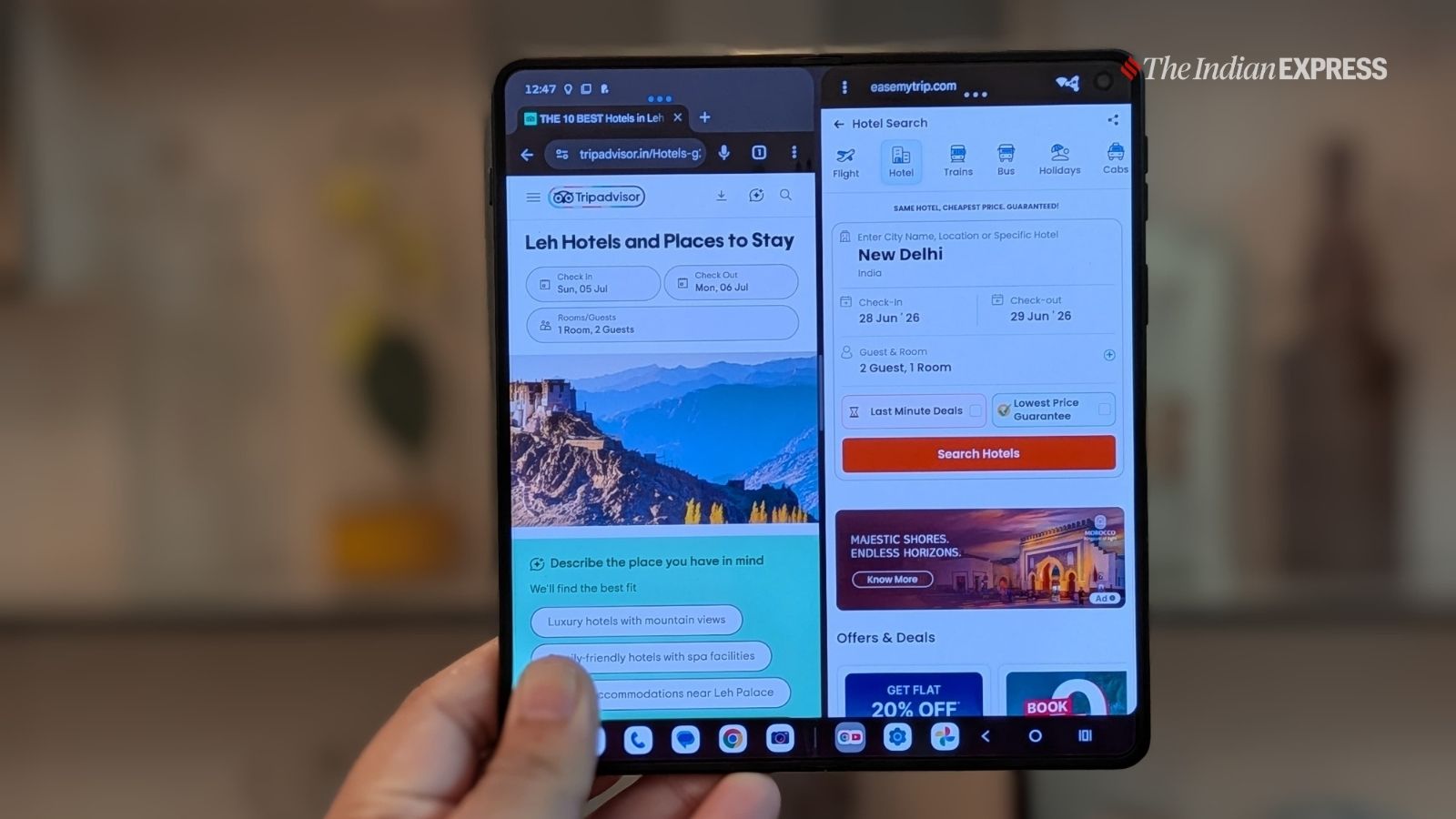
Multitasking is what makes foldables such interesting devices, making them much more capable than standard smartphones. On the Razr Fold, split-screen mode supports up to three apps simultaneously. However, unlike the Galaxy Z Fold 7, the Razr Fold lacks flexible app resizing, which means users have no control over how much screen space each app occupies.
App continuity works well on the Razr Fold, as I could seamlessly switch from an app on the external display to the inner screen. Another example of multitasking on the Razr Fold is Freeform, which places an app in a small floating window that you can move around the screen, similar to YouTube’s picture-in-picture mode. Additionally, the phone offers a feature called Moto Unplugged. When enabled, this mode limits distractions by allowing you to receive only text messages and phone calls while still giving you access to the camera, helping you stay focused on the task at hand.
Story continues below this ad
Fast performer and long battery life
The Razr Fold comes with a capable chipset. It is powered by the Snapdragon 8 Gen 5 chip (16GB of RAM and 512GB of storage on my review unit), which may not be Qualcomm’s latest and most powerful flagship processor, but it is still highly capable. Does it matter? Based on my experience, the Razr Fold has performed extremely well. Comparing most day-to-day tasks with my Samsung Galaxy S26 Ultra, its performance was at least on par.
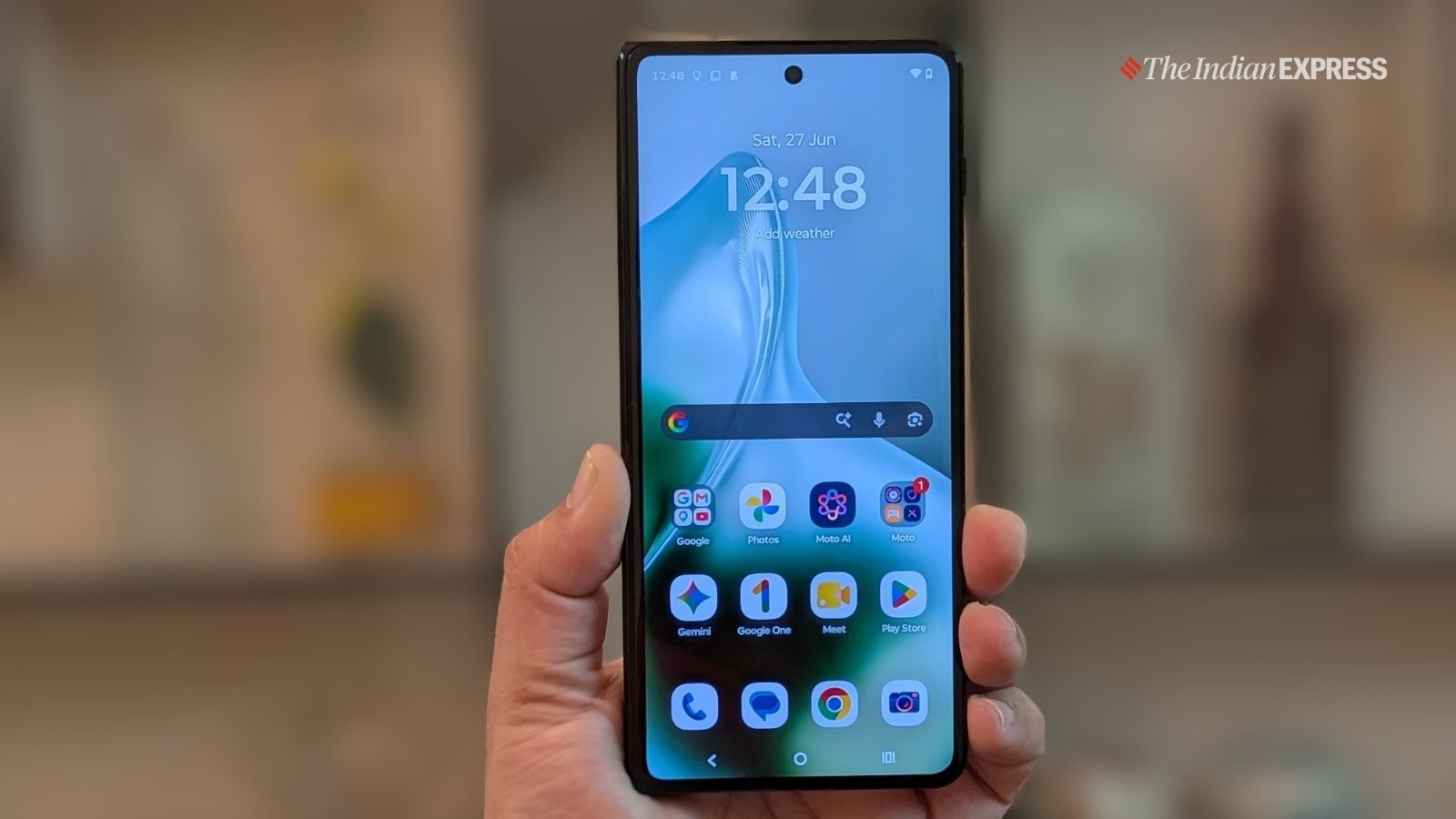
The phone comes with Android 16 out of the box, and Motorola promises “7 OS updates and up to 7 years of security updates starting from the global launch date”, putting it in line with other premium smartphones from Samsung and Google. The user interface is clean and mostly bloat-free, which should be the case if you are spending over one and a half lakh rupees for a phone.
Gaming is another area where the Razr Fold shines, especially if you enjoy playing games on its expansive 8.1-inch display. The phone features speakers tuned by Bose and Dolby Atmos integration, which was nice for watching movies or listening to music.
The Razr Fold also has a range of AI features, powered by Google Gemini, Moto AI, and Perplexity. There’s even a dedicated side button that lets you quickly access tools for summarising notifications, generating images, or creating playlists. The most practical AI feature, however, is Google’s Circle to Search, which lets you quickly pull up more details about whatever is on your screen—a feature now available on most Android phones.
Story continues below this ad
Motorola also offers Smart Connect, its version of a productivity tool that works with Windows laptops running Windows 10 or later. Once installed, you can access the Razr Fold’s apps and files on the laptop using Cross Control. When the phone is unfolded and connected to a laptop, you can use the Motorola Razr Fold as a second screen and easily transfer files between devices. However, I didn’t get a chance to test this feature.
The Razr Fold is fitted with a 6,000mAh silicon-carbon battery, a next-generation lithium-ion technology designed to offer longer battery life and faster charging. The phone ships with the 90W charging brick required to take full advantage of its full-speed 80W wired charging, which Motorola calls TurboPower charging. It takes approximately 46 minutes to charge the device from 20 per cent to 100 per cent. On an average day, taking plenty of photos and videos, a fair bit of web browsing, and using WhatsApp extensively, the battery didn’t fall short of Motorola’s claims; in fact, it performed better than I expected.
Excellent cameras
I have been a staunch critic of the camera performance on Motorola smartphones for years, but I was pleasantly surprised by how good the Razr Fold cameras are. The phone packs a triple 50-megapixel rear camera system, consisting of a wide-angle, ultrawide, and telephoto lens. There’s also a 20-megapixel selfie camera on the front and a 32-megapixel selfie camera on the inner display.
My experience with the cameras on foldable phones from Samsung and Google has been mixed and underwhelming. However, Motorola has nailed the camera experience with the Razr Fold. Photos look crisp, clear, and vibrant. Shots appear realistic and convincing, and I can finally capture beautiful landscapes in a way that I wasn’t able to with previous foldable phones.
Story continues below this ad
The Razr Fold’s camera adds contrast, brightens faces, and preserves highlights in the sky, for example. In my shots, the camera maintains natural skin tones while preserving fine details. However, I do wish the camera could capture portrait shots a little better.
Below are some camera samples shot on the Razr Fold. Please note that the images have been compressed for the web.






So, should you buy the Motorola Razr Fold?
In the last few years, foldable phones have gotten better, yet they somehow still feel unfinished. The Razr Fold keeps the segment exciting, but the device is far from perfect. Foldables, in my opinion, still lack an optimised user interface designed for dual-screen devices, and the Razr Fold doesn’t solve that problem. However, Motorola’s first attempt at a book-style foldable phone is commendable, with very few negatives. That said, I do wish Motorola had introduced a wider-screen foldable as its debut book-style foldable, as the Razr Fold’s form factor no longer feels as fresh or unique as it once did.
That said, the Razr Fold can easily serve as your daily driver and replace a traditional slab smartphone, but it comes at a high cost, especially at a time when job losses are rising and economic uncertainty remains high. If you have the budget, the Razr Fold fits well into the professional market. If you are an enthusiast, a business user, or a real estate professional looking for a device that stands out from the crowd and delivers a powerful, unique experience beyond the run-of-the-mill smartphones available today, this is a device that won’t disappoint.