


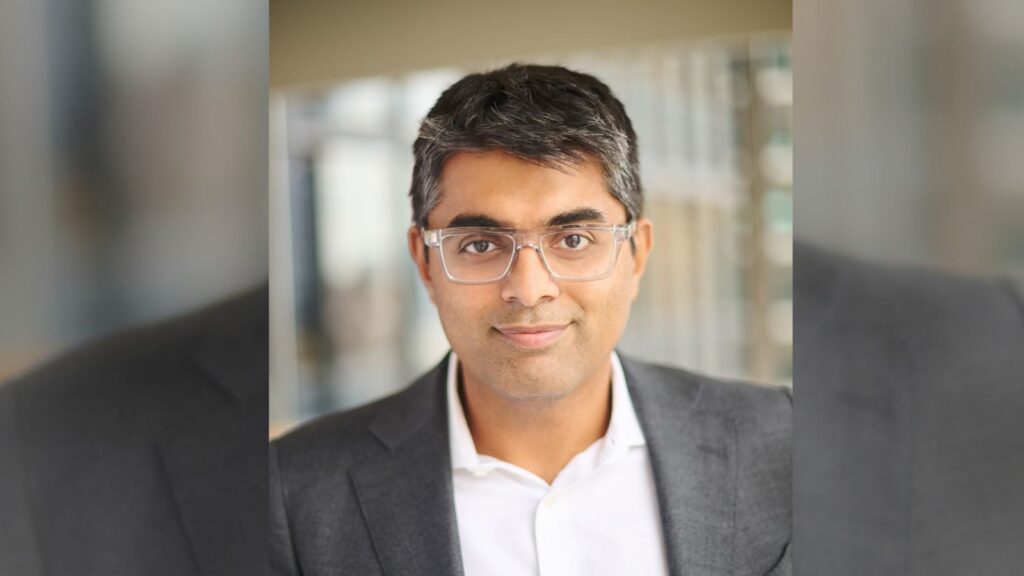
Kumar Garg is the President at Renaissance Philanthropy, a US-based non-profit that, within its first two years, catalysed more than $500 million in philanthropic funding globally for science, technology, and innovation.
The organisation has launched 22 time-bound, thesis-driven philanthropic funds and programmes addressing global challenges. These include advanced research to tackle climate emergencies, supporting breakthrough ideas for student success, responsibly and rapidly scaling geologic hydrogen and providing seed funding to researchers and technologists for improving social service delivery.
Prior to joining Renaissance Philanthropy, Garg worked with Schmidt Futures, where he helped design and launch moonshot initiatives in education. Before that, he helped set budget and policy priorities for the Obama Administration as part of the White House Office of Science and Technology Policy.
Kumar holds a BA from Dartmouth College and a law degree from Yale Law School.
In an interview with indianexpress.com, Garg speaks about the goals and the structure of Renaissance Philanthropy, the moonshot ideas the organisation funds, the hard-to-solve problems in tech, and the impact they have created. Edited excerpts:
Venkatesh Kannaiah: Tell us about your journey to Renaissance Philanthropy.
Story continues below this ad
Kumar Garg: I studied political science and computer science in college and was interested in government, so after graduate school, I ended up serving in the Obama administration. I worked for President Barack Obama’s science advisor and got exposure to how science and technology policy is developed across a wide range of areas — space, commercialisation, advanced manufacturing and math and science education.
After that, I went to work for Eric Schmidt of Google and helped build the Science and Tech Foundation, Schmidt Futures. It focused on how philanthropic capital could advance different fields of research and apply them to the public good.
Renaissance Philanthropy was essentially a spinout. The core team came from working directly with Eric Schmidt.
Venkatesh Kannaiah: What was the idea behind Renaissance Philanthropy?
Kumar Garg: The idea came from recognising that the big challenges like climate, AI, education, and economic mobility are problems we need to address today and not later.
Story continues below this ad
So the question became: could Renaissance build high-quality science and technology programmes — accelerating middle school math with AI, developing new vaccine platforms, identifying new energy sources like geologic hydrogen — and structure them more like investment funds, but for philanthropy?
The model was to build technical programmes and philanthropic funds around specific sectors, and then go to donors and say: Rather than building all of this internally, you can participate almost like a Limited Partner in a venture fund.
If we want more capital deployed toward hard problems, we need more vehicles that make it easier for people to participate. That was the basic idea.
In two years, we’ve helped move about half a billion dollars — roughly $250 million directly and another $250 million through advisory support.
Venkatesh Kannaiah: How do you design your programmes?
Story continues below this ad
Kumar Garg: Our starting point is that philanthropy is only one small part of a much larger system. So the question for us is: what kind of intervention can make a substantial impact within three to five years, in a way that the broader field can eventually sustain and build upon?
A lot of the way we design our programmes comes down to identifying really hard problems in science or education where focused R&D and technological innovation could make a meaningful difference.
Venkatesh Kannaiah: Tell us about some of your programmes which are creating an impact.
Kumar Garg: For example, in middle school math, we looked at a 2012 J-PAL study that showed intensive, close tutoring support could double the rate of learning.
Story continues below this ad
The challenge was cost. The study found it cost around $4,000 per student. That’s expensive even in the United States. We are looking at whether we can bring it down to $500.
It is a five-year programme involving multiple teams, all working towards the goal. They’re using AI, combining it with established tutoring science, and integrating different tools and methods into a coherent system.
It is very difficult to fund the R&D needed to make this kind of work possible. These projects require applying emerging technologies, running hundreds of pilot studies, and testing different implementation models.
We also have an initiative focused on early reading. Here, AI is used for screening and assessment.
Story continues below this ad
One of the major challenges is that educators don’t know a child’s actual reading level, or whether the child may have undiagnosed reading difficulties such as dyslexia or speech-related issues. Those screenings are currently expensive and difficult to administer at scale, which means many children never get assessed properly. Without that information, it’s hard to know what intervention is needed.
AI systems are already very good at automated speech recognition for adults, but far fewer people have focused on building speech recognition systems that work well for children.
Another area is tooling for mathematical research using AI. We awarded over $18 million to researchers globally to build tools that make it easier for mathematicians to use AI in their work.
We are already seeing some of the tools spread quickly within the research community. For example, Lean is a programming language which allows mathematical proofs to be written in a computationally verifiable form. Some of the early grants we supported are already influencing how mathematicians collaborate and the kinds of tools they use in their day-to-day work.
Story continues below this ad
There is the Public Benefit Innovation Fund. The idea is to improve one of the major functions of government, like delivering benefits and services to citizens. In the US, estimates suggest that nearly a trillion dollars in benefits go undelivered because of administrative inefficiencies and system complexity.
So we asked whether emerging technologies like AI could improve how these systems operate. A simple example is call centres. Many government agencies struggle to answer all incoming calls, even for basic questions like confirming whether an application has been received or whether someone qualifies for a programme.
Some of the grants we supported have led to deployments in US states, where new tools now help with eligibility checks, automate routine support tasks, and track policy or code changes more effectively.
We’re particularly interested in helping governments adopt AI in a more experimental and evidence-driven way.
Venkatesh Kannaiah: Tell us about your accelerator programme.
Story continues below this ad
Kumar Garg: We run a programme called the Big If True Science Accelerator. The idea behind it is that ambitious researchers often don’t receive much coaching on developing a truly transformative idea. They’re usually focused on running their labs and applying for grants.
So in our accelerator, we offer 15 weeks of coaching and introduce them to governments, donors, and other potential supporters.
Our broader goal is to increase the ambition of both donors and scientists. We’re currently on our third cohort, with around 45 scientists having gone through the programme so far.
Venkatesh Kannaiah: Tell us about moonshot ideas that you are funding or looking to fund.
Kumar Garg: One, which I already mentioned, is literacy work, whether we can cut in half the number of children struggling with reading by third grade through better identification of early reading difficulties using AI.
Another area is the role of hidden health burdens in learning outcomes. One example is air quality in schools. Research shows that cleaner air in classrooms has a meaningful impact on both learning and health outcomes. Even relatively simple interventions, like better air purification systems, can have very high returns.
So we’ve been exploring a programme on building cheaper, more deployable air purification technologies and making sure they’re actually used in schools. We’re exploring that both in the US and globally.
Another area we’re interested in is lead pollution. Lead exposure can have major impacts on IQ and long-term health outcomes. One idea we’ve been looking at is whether we can build a much better blood test for detecting lead exposure. The test widely used today was developed roughly 40 years ago and is not precise.
We’re looking at where AI can transform scientific research itself. We already have a programme in mathematics, but we’re interested in other domains as well.
One area I find very compelling is monsoon prediction. The Indian government has spoken about this challenge, but I think there’s still room for a much more focused push around advanced prediction models.
We’ve spoken with researchers who have modelled the social benefits of improved monsoon prediction. We’ve also begun conversations with donors and governments about whether there could be support for a more concentrated effort in this area. It is still at an exploratory stage, but it’s something I’m personally very interested in because of the scale of potential impact.
We’ve been doing work around geologic hydrogen — the idea that instead of manufacturing hydrogen through industrial processes, you could extract naturally occurring hydrogen directly from underground sources. If it proves viable, it could become an important tool for decarbonising sectors that are otherwise very difficult to transition. The conversation now is about building better subsurface maps, identifying pilot opportunities, and understanding where the resource potential may exist.
We have also been exploring the idea of potassium-enriched salt. There’s already strong randomised controlled trial evidence suggesting that a significant share of cardiovascular disease may be linked to potassium deficiency. By slightly increasing the potassium content in salt — without changing the taste — you may be able to meaningfully improve population-level health outcomes.
That could be especially important in countries with high rates of hypertension, including both India and the United States.
One of our programmes looks at whether it’s possible to build a new generation of space-based telescopes that generate vastly more data at a fraction of the cost of traditional systems.
Venkatesh Kannaiah: Tell us about science and tech ideas which you think are very hard to crack.
Kumar Garg: I think biology is extremely hard. People often say, “If we can just figure out this one thing, then AI will solve the rest,” or that once a particular breakthrough happens, everything else becomes straightforward. But what we keep finding is that the deeper you go, the more complex the system turns out to be.
Take cancer, for example. Globally, we’ve made enormous progress, and that progress is continuing. But the more we learn, the more we realise it’s not one disease — it’s thousands of different subtypes and biological pathways. So even as advances in biology accelerate, it remains a deeply complex, wicked problem that will require many smart people working on it from multiple angles.
Another challenge is making sure we think about science and technology problems in terms of bottlenecks. People often assume that solving one immediate issue will unlock everything else. But in practice, innovation systems are usually constrained in multiple ways at once.
For example, we’ve been exploring a programme around clinical trials — specifically, how to accelerate their pace. Most people don’t immediately think of that as a science and technology challenge. They think science means inventing the next drug or therapy. But if the clinical trial system itself is slow or inefficient, then all of that innovation gets bottlenecked because new treatments can’t reach the market.
We have a fellow on our team based in India who has been working on how India could modernise its Phase 1 clinical trial system. Right now, the process has become increasingly slow, while countries like China are moving much faster. As a result, many promising ideas and companies simply go elsewhere because they can’t get trials started efficiently.
That’s one of the key lessons we try to emphasise: when thinking about difficult science and technology problems, you have to think carefully about bottlenecks.
Sometimes the bottleneck is regulation. Sometimes it’s a shortage of talent. Sometimes it’s that two different scientific fields aren’t communicating effectively with each other. Sometimes it’s funding. But people often mistake the most visible or immediate challenge for the only challenge.
Venkatesh Kannaiah: Do you work with startups? And if so, how do you engage with them?
Kumar Garg: So the way our model works is that we raise money philanthropically. The donors who support us are writing cheques without expecting financial returns. The capital comes into the organisation and is then allocated to specific funds or programmes.
Once money enters a particular programme, the fund leader has broad discretion over how it should be deployed. That could mean issuing a grant, making a gift, funding a contract, or even using tools like loans or mission-related investments.
Venkatesh Kannaiah: How do you engage with governments and local innovation ecosystems?
Kumar Garg: We have a number of government partnerships, most of them with national governments. For example, we partner with national innovation agencies like ARIA in the UK, SPRIND in Germany, and we recently signed a partnership agreement with the Cabinet Office in Japan.
A big reason governments work with us is that they want to make their R&D ecosystems more ambitious. They want to identify the most ambitious researchers in their systems and help them do their best work. A lot of our programmes are designed specifically to identify those researchers and coach them, which governments find valuable.
Venkatesh Kannaiah: What are your views on the Indian innovation ecosystem?
I think the Indian innovation ecosystem has many strengths. It has a deep engineering base, tremendous manufacturing capacity, and major capabilities in areas like pharmaceuticals.
India is also deeply connected to the broader Western science and technology ecosystem, partly because of English and partly because of the Indian diaspora in places like the United States. Between the IIT system and the broader technical ecosystem, there’s already a great deal of scientific and engineering depth.
I think the big challenge now is how to think more systematically about ambitious R&D programmes in India. Often, you’ll see excellent individual researchers doing strong work, or institutions with interesting partnerships and pockets of innovation. But if you ask questions like, “What is India’s equivalent of the UK Biobank?” — meaning a large-scale, deeply structured, high-quality national research dataset that many researchers can build on — it’s not clear what those large shared moonshot infrastructures look like.
The question is: what is the social infrastructure for designing and launching these moonshots? Who is doing the early-stage scoping work, identifying the talent, convening workshops, developing the first pilot studies, and building the initial momentum before governments step in at scale?
I think building more of that culture around ambitious experimentation would be extremely valuable in India as well.